
Introduction
High-Performance Liquid Chromatography (HPLC) is an essential analytical technique widely used in pharmaceuticals, food safety, environmental monitoring, and other industries. Despite its robustness, even experienced operators may encounter system malfunctions or decreased column efficiency. This article outlines the 10 most common HPLC problems and provides practical solutions to help laboratory personnel troubleshoot and optimize their systems efficiently.
10 Common HPLC Problems and Their Solutions
1. Retention Time Shifts
Symptoms:
Analytes elute earlier or later than expected, which can compromise both qualitative identification and quantitative analysis. Retention time shifts can make method reproducibility unreliable and may indicate underlying system or column issues.
Causes:
●Mobile Phase Composition Changes: Even small variations in solvent ratios, pH, or ionic strength can alter analyte interactions with the stationary phase, causing shifts.
●Column Temperature Fluctuations: Temperature directly affects analyte partitioning; unstable oven or lab temperature can lead to inconsistent retention times.
●Column Aging or Deterioration: Repeated use, exposure to extreme pH, or accumulation of contaminants can reduce column efficiency and cause retention drift.
Solutions:
●Prepare fresh mobile phases, ensuring precise solvent ratios and complete degassing to remove dissolved gases.
●Maintain a consistent column temperature using a calibrated column oven, and avoid frequent temperature fluctuations.
●Monitor column performance regularly; replace or regenerate columns when retention shifts exceed acceptable limits.
●Always equilibrate the column thoroughly with the mobile phase before starting the analysis to stabilize retention times.
Tips: Regularly logging retention times for standard compounds can help detect early shifts and prevent unexpected deviations in sample analysis.
2. Baseline Noise
Symptoms:
The detector signal shows random fluctuations or spikes, reducing sensitivity and making it difficult to detect low-concentration analytes. Excessive noise can mask small peaks and lead to inaccurate quantitation.
Causes:
●Aging Detector Lamp: UV or PDA detector lamps degrade over time, reducing intensity and increasing electronic noise.
●Mobile Phase Impurities: Particulate matter, dissolved gases, or contaminants in solvents can cause transient signal fluctuations.
●Air Bubbles in the System: Trapped air in the pump or flow path can intermittently scatter light or create pressure pulses, introducing noise.
Solutions:
●Replace aging detector lamps according to manufacturer recommendations to restore signal stability.
●Filter and degas all mobile phases to remove particulate matter and dissolved gases.
●Purge the system thoroughly before analysis to eliminate trapped air.
●Implement a routine maintenance schedule for the detector and fluidics system to reduce noise sources.
Tips: Using a reference wavelength or baseline subtraction in PDA detectors can help compensate for minor noise, improving peak detection reliability.
3. Baseline Drift
Symptoms:
A slow, continuous rise or fall of the baseline is observed over time, which can interfere with peak integration and quantitation accuracy. Baseline drift may be subtle but can significantly affect low-concentration analyses.
Causes:
●Laboratory Temperature Variations: Changes in room temperature can affect detector electronics and mobile phase viscosity, leading to drift.
●Gradient Mobile Phase Imbalances: In gradient elution, improper mixing or pump calibration can result in a drifting baseline.
Solutions:
●Maintain a stable laboratory temperature and avoid placing the instrument near heat or airflow sources.
●Fully equilibrate the column with the mobile phase prior to analysis, especially when using gradient methods.
●Use high-purity solvents to prevent baseline instabilities caused by impurities.
●Calibrate gradient systems to ensure accurate pump ratios and consistent solvent delivery.
Tips: Monitor baseline behavior with blank injections periodically. Sudden changes in drift patterns can indicate system issues such as pump malfunction or column degradation.
4. Peak Tailing
Symptoms:
Peaks show a long tail on the trailing edge, causing asymmetry. This can affect resolution between closely eluting compounds and reduce quantitation accuracy.
Causes:
●Column Contamination: Adsorbed impurities or strongly retained compounds create secondary interactions, leading to tailing.
●Active Sites on the Stationary Phase: Residual silanol groups on silica-based columns can interact with polar or basic analytes.
●Improper Column Packing: Non-uniform packing can cause uneven flow paths and peak distortion.
Solutions:
●Flush the column with appropriate cleaning solvents to remove strongly retained contaminants.
●Use end-capped columns or columns with deactivated stationary phase surfaces to minimize secondary interactions.
●Ensure proper storage of the column and avoid incompatible sample solvents.
For persistent tailing, consider replacing the column.
Tips: Monitoring peak symmetry regularly can indicate early column contamination and prevent compromised data.
5. Peak Fronting
Symptoms:
Peaks appear skewed toward the leading edge, creating sharp, asymmetric fronting peaks.
Causes:
●Sample Overload: Injecting too much sample can exceed the column’s capacity.
●Column Damage: Mechanical or chemical damage can cause uneven flow paths and fronting.
Solutions:
●Reduce sample injection volume or lower sample concentration.
●Replace columns that show signs of degradation or damage.
●Verify that the sample solvent is compatible with the mobile phase to prevent solute precipitation.
Tips: Gradually increasing injection volume in method development helps determine the column’s load capacity.
6. Peak Splitting
Symptoms:
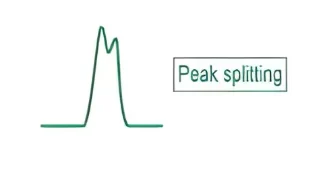
A single analyte peak splits into two or more peaks, reducing resolution and complicating integration.
Causes:
●Non-uniform Column Packing: Can create multiple flow paths within the column.
●Sample Solvent and Mobile Phase Mismatch: Strong sample solvent relative to the mobile phase may disturb solute partitioning.
●System Leaks: Leaks can cause pressure fluctuations and irregular flow.
Solutions:
●Match sample solvent strength to the mobile phase.
●Inspect the system for leaks and tighten all connections.
●Ensure proper column installation and conditioning before analysis.
Tips: Running a test standard can help determine whether splitting is due to the column or injection issues.
7. Ghost Peaks
Symptoms:
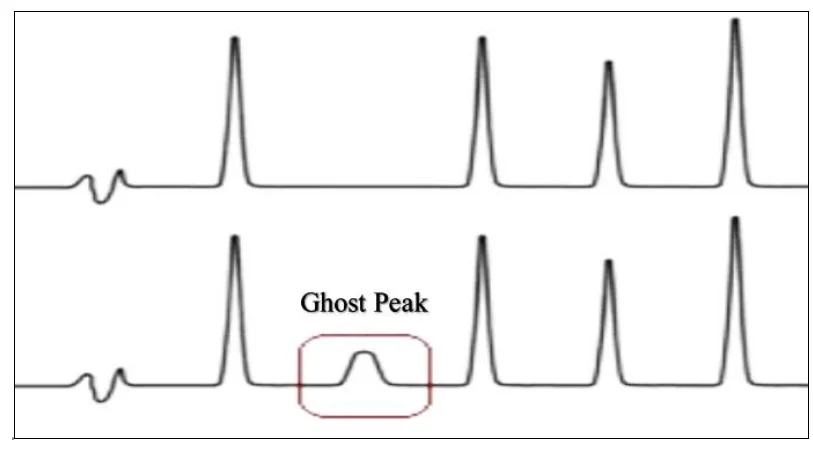
Unexpected peaks appear in blank injections, interfering with analyte detection.
Causes:
●Mobile Phase Contamination: Impurities or degraded solvents produce spurious peaks.
●Carryover from Previous Injections: Strongly retained analytes may elute in subsequent runs.
●Injector or Loop Residuals: Residual analytes trapped in the injector can create ghost peaks.
Solutions:
●Use high-purity, freshly prepared solvents.
●Clean the injector, sample loop, and any tubing that contacts samples.
●Flush the system thoroughly between runs to prevent carryover.
Tips: Regular blank runs can help detect ghost peaks early and prevent interference with actual sample analysis.
8. High Back Pressure
Symptoms:
System pressure rises above normal operating limits, affecting pump performance and peak shapes.
Causes:
●Clogged Frits or Filters: Particulates accumulate and restrict flow.
●Column Contamination: Strongly retained compounds or precipitated solutes increase resistance.
●Precipitate Formation in Mobile Phase: Solvent incompatibilities may lead to precipitate buildup.
Solutions:
●Reverse-flush the column when appropriate.
●Filter all mobile phases through 0.2–0.45 μm filters.
●Replace clogged frits and regularly maintain the pump.
Tips: Monitoring system pressure over time can indicate early column fouling before peak shapes deteriorate.
9. Low Pressure
Symptoms:
System pressure drops unexpectedly, potentially compromising solvent delivery and separation.
Causes:
●Worn Pump Seals or Pistons: Causes reduced flow resistance.
●System Leaks: Loose fittings or damaged tubing reduce system pressure.
●Insufficient Solvent: Low solvent levels in the reservoir can cause cavitation.
Solutions:
●Replace worn pump seals or pistons according to the manufacturer’s schedule.
●Inspect the system for leaks and tighten all connections.
●Ensure the solvent reservoir is filled with adequate mobile phase.
Tips: Regular pump maintenance and pressure checks help maintain stable operation and prevent low-pressure interruptions.
10. System Leaks
Symptoms:
Visible solvent leaks, pressure instability, or unusual detector signals indicating fluid loss.
Causes:
●Loose Fittings or Connections: Can result in solvent leakage.
●Aged or Damaged Seals: Worn seals may fail under high pressure.
●Damaged Tubing: Cracks or degradation compromise system integrity.
Solutions:
●Tighten all fittings and connections.
●Replace old or damaged seals and tubing.
●Regularly inspect the system for signs of wear to prevent leaks.
Tips: Leak checks during system start-up are essential for both safety and data integrity.
uHPLCs: Your One-Stop Solution for HPLC Consumables
| HPLC Problem | Recommended uHPLCs Products | How it Helps |
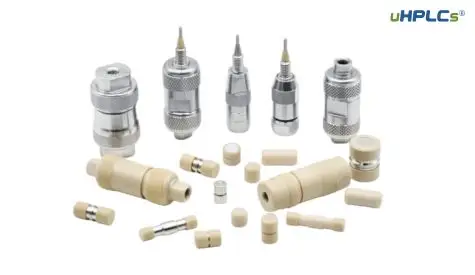
| Retention Time Shifts | HPLC Guard Columns | Helps stabilize retention times by protecting the main column from contaminants |
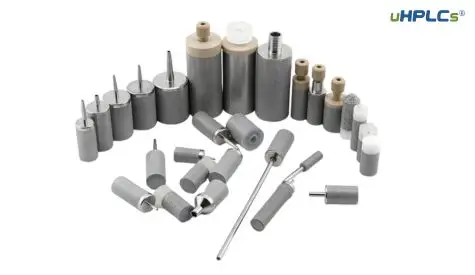
| Baseline Noise | HPLC Inline Filter, HPLC Solvent Inlet Filter | Helps reduce noise by removing particulates and dissolved gases from the mobile phase |
| Baseline Drift | HPLC Solvent Inlet Filter | Can improve baseline stability by ensuring consistent mobile phase quality |
| Peak Tailing | Ghost Buster Column, HPLC Peak Smooth Column | Helps improve peak symmetry by minimizing secondary interactions |
| Peak Fronting | HPLC Guard Columns | Helps maintain proper peak shape by protecting the column from overload or contamination |
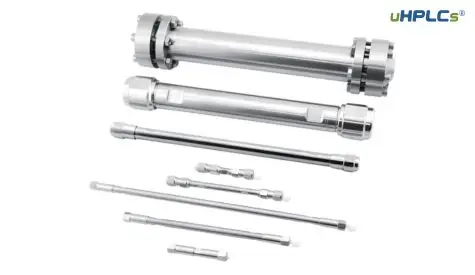
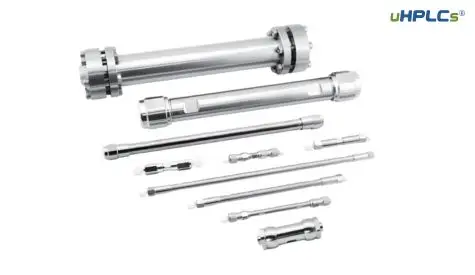
| Peak Splitting | HPLC Column Packing Hardware | Can improve peak resolution by ensuring uniform column packing and proper installation |
| Ghost Peaks | Ghost Buster Column, HPLC Sample Loop | Helps reduce carryover and unexpected peaks by removing residual analytes |
| High Back Pressure | HPLC Frit, HPLC Capillary Tubing | Helps maintain smooth flow and prevent clogging |
| Low Pressure | HPLC Fittings and Connectors, HPLC Capillary Tubing | Helps maintain system pressure by preventing leaks and ensuring proper flow |
| System Leaks | HPLC Fittings and Connectors, HPLC Capillary Tubing | Can help maintain system integrity and prevent solvent leakage |
Ready to optimize your HPLC workflow? Explore uHPLCs’ full range of high-quality consumables designed to protect your columns, improve peak performance, and ensure reliable results. Visit our website or contact our sales team at [email protected] to find the solution for your laboratory needs and keep your HPLC systems running at peak efficiency!
Conclusion
HPLC troubleshooting requires systematic evaluation from mobile phase, sample, column, to instrument maintenance. Understanding these 10 common problems, their underlying causes, and practical solutions allows operators to maintain reliable data quality, extend column lifespan, and minimize downtime. Regular monitoring, preventative maintenance, and methodical troubleshooting are key to achieving consistent, high-performance HPLC results.